The doctor’s drug addiction
The Box ManThe doctor’s drug addiction began during wartime treatment for a strange, undiagnosed illness and became a central force in the relationship between the Army Medical Captain and the narrator, the former orderly who later practiced medicine under his identity. The addiction bound care to deception: the narrator supplied drugs out of friendship and fear of abandoning a suffering man, while the Captain’s growing dependence helped sustain the illegal practice that both men came to rely on.
Illness and the Beginning of Dependence
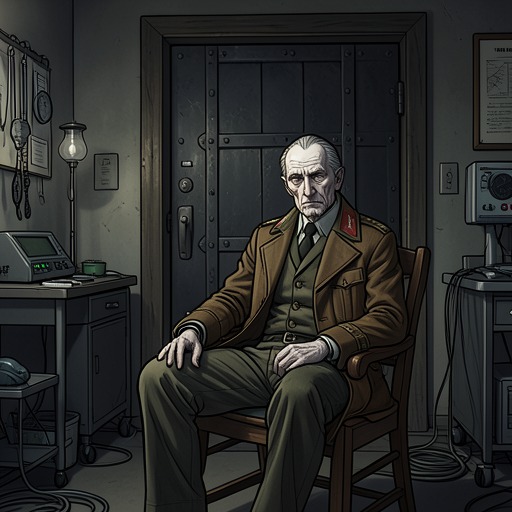
The narrator traces the illness to the year before the war ended, when he served as an orderly in a field hospital where the Army Medical Captain was absorbed in research on extracting sugar from wood. The Captain had noticed goats eating paper and was investigating whether substances in their intestines could help break down cellulose. The account does not establish whether his subsequent illness came from infection by the goats’ intestinal bacteria or from tasting processed wood; its cause remained unknown even to the Captain and his colleagues.
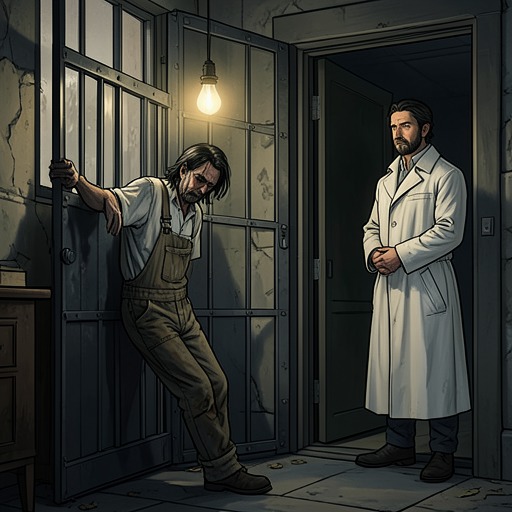
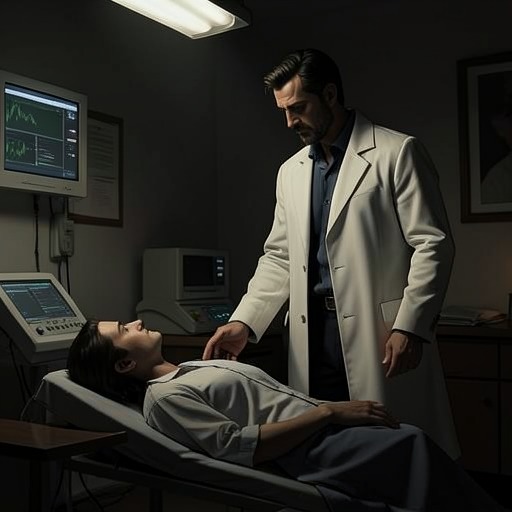
The symptoms followed a striking cycle. The Captain first ran a high fever for three successive days, then suffered severe muscular cramps, spasms, and nervous disorders in recurring three-day periods. The narrator, who had learned to perform complicated operations under the Captain’s guidance and felt kindly toward him, took responsibility for his care when the condition failed to improve. In response to the Captain’s persistent requests, the narrator began administering drugs daily. By the end of the war, the Captain showed symptoms of addiction. The narrator’s account presents this not as a cure for the illness but as a further consequence of an unsuccessful effort to relieve suffering.
Care, Clinic, and Illicit Practice
After demobilization, the two men opened a clinic and continued working together. The narrator assisted with management and medical practice, while the Captain’s condition remained unimproved. The Captain could still give instructions through medical charts but was personally unable to examine or treat patients. The narrator therefore carried out much of the practical work while borrowing the Captain’s name and qualifications.
In his later explanation, the narrator identifies replenishing the Captain’s drugs as his first reason for continuing illegal practice. He says he acted from friendship rather than rank or coercion and accepts responsibility for the decision. He also describes the Captain’s addiction as unusually difficult to treat, with recovery seeming highly unlikely. In the narrator’s view, continued drug administration amounted to euthanasia over time, yet he lacked the resolve to abandon the Captain. His account makes the dilemma inseparable from the lawbreaking: the same practice that kept the clinic operating also enabled the supply on which the Captain depended.
Dependence and the Borrowed Identity
The addiction affected the arrangement between the men as well as the Captain’s health. The narrator says that the Captain feared being left and used flattery and repeated threats of suicide to discourage him from giving up medicine. He describes the Captain’s pursuit of drugs as increasingly cunning and reckless. The narrator regarded the possibility of suicide as a serious practical and personal burden, not merely a threat in an argument.
Nana, who had originally been the Captain’s legal wife, lived with the narrator as his common-law wife and managed the clinic’s accounts. The narrator says that the Captain pressed Nana to form a relationship with him as a means of keeping him from leaving; only later did Nana and the narrator become intimate. In the narrator’s interpretation, this pressure reflected a persecution complex associated with the later stages of addiction. The household and the clinic thus became part of the same unstable arrangement: Nana handled the accounts, the narrator supplied care and practiced under another man’s identity, and the Captain’s dependence helped hold the arrangement together.
Withdrawal, Disclosure, and Consequences
By the eighth year of the narrator’s practice, the Captain’s speech and conduct had become conspicuous, and reports that he might be mad reached the clinic. Their use of unusually large quantities of drugs also brought investigation. The men closed the clinic and moved to another city. As the Captain’s mental state deteriorated and his inclination toward suicide grew more pronounced, Nana suggested that he stop appearing in public and that the narrator register as him. The narrator says the Captain agreed; the patients’ confidence in the narrator allowed the practice to continue under the borrowed identity.
The narrator eventually argues that the Captain no longer needed him and that he had no obligation to keep deceiving the public through illegal practice. He acknowledges that the borrowed qualifications secured his livelihood and that patients could suffer economically or physically from unlawful treatment, while rejecting the Captain’s view that the absence of a claimant meant there was no crime. In the unfinished affidavit, the narrator identifies an unknown corpse as the Army Medical Captain and refers to the Captain’s longstanding danger of suicide, while expressing regret that he had not stopped him. The account does not establish the corpse’s cause of death. It does show how the addiction’s consequences extend beyond treatment: dependence helped drive concealment and professional impersonation, and the narrator’s final attempt to disclose the truth arrives alongside an unresolved death.